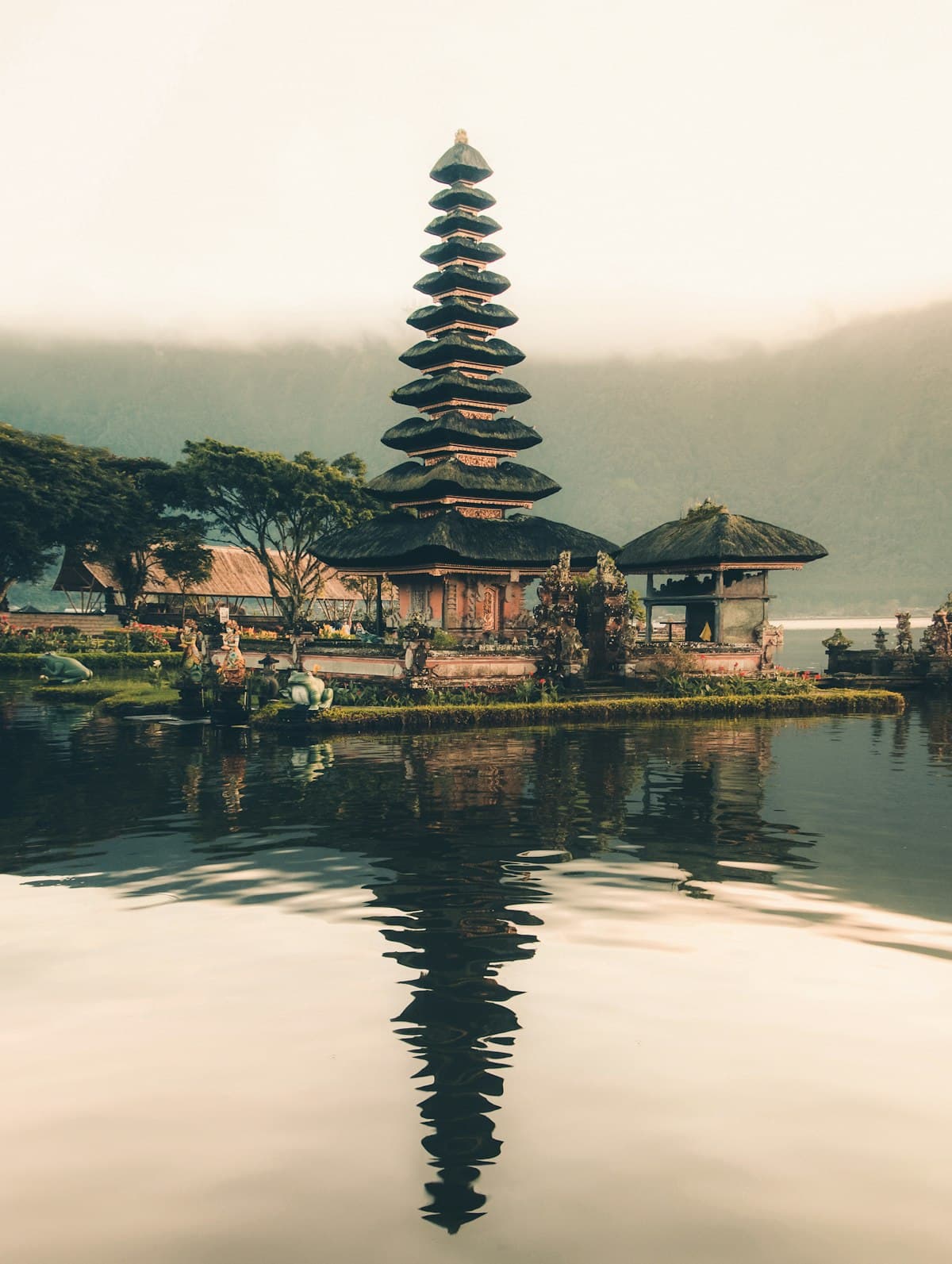
Bali is the only Hindu-majority island in a country of 270 million Muslims, and that fact shapes almost everything you see here. The flowers on the sidewalks aren't decoration — they're canang sari, daily offerings made by hand, three times a day, in every household. Once you learn to see them, you can't unsee them.
A short, useful history
Bali was Hindu-Buddhist long before Islam arrived in the Indonesian archipelago in the 13th century. When the Majapahit empire fell on Java in the 1500s, its priests, scholars, and royalty fled to Bali — and Bali became the last keeper of an entire civilization. That refugee history is why Balinese culture has unusual depth: dance, music, painting, and ritual have been practiced and refined here for five hundred years longer than the surrounding region.
The spiritual layer travelers miss
Tri Hita Karana is the philosophy that organizes Balinese life: harmony with the divine, with other people, and with nature. Once you know about it, you start to recognize it everywhere — in how rice fields are subdivided through the subak irrigation system, why every house has a family temple in the northeast corner, why ceremonies disrupt traffic for hours and no one seems to mind.
What not to miss
- A Kecak fire dance at Uluwatu Temple at sunset — over a hundred chanting men, the cliffs of the Bukit, and an unforgettable acoustic experience
- Tirta Empul — the holy spring water temple. Bring an offering and participate respectfully (a sarong is required and provided)
- Tegallalang rice terraces at 7 a.m., not 11 a.m. — the difference is profound
- A traditional cooking class in a family compound, not a hotel — the recipes change household to household
Beyond Ubud and Seminyak
If you've been before, head north and east. Sidemen valley has the rice terraces of Ubud without the traffic, and homestays where the host's grandmother teaches you to make ceremonial cakes. The east coast around Amed is a free-diving and quiet-villa paradise. The Munduk highlands have waterfalls, coffee plantations, and morning fog you can walk into.
Etiquette that matters
- Always wear a sarong at temples — even at archaeological sites that no longer hold ceremonies
- Never step on, photograph from above, or block a canang sari offering — they're for the spirits, not you
- Use your right hand to give and receive. The left is considered unclean
- During Nyepi (Balinese New Year, usually March), the entire island shuts down for 24 hours of silence — even the airport. Plan around it or, better, plan into it. It is unforgettable.
The honest part
South Bali — Canggu, Kuta, Seminyak — has changed dramatically in the last decade and is now extremely crowded and traffic-heavy. If your impression of Bali came from social media in 2018, the reality on the ground in 2026 is different. The good news: the culture and the magic are still there. You just have to go a little further to find it. We do.