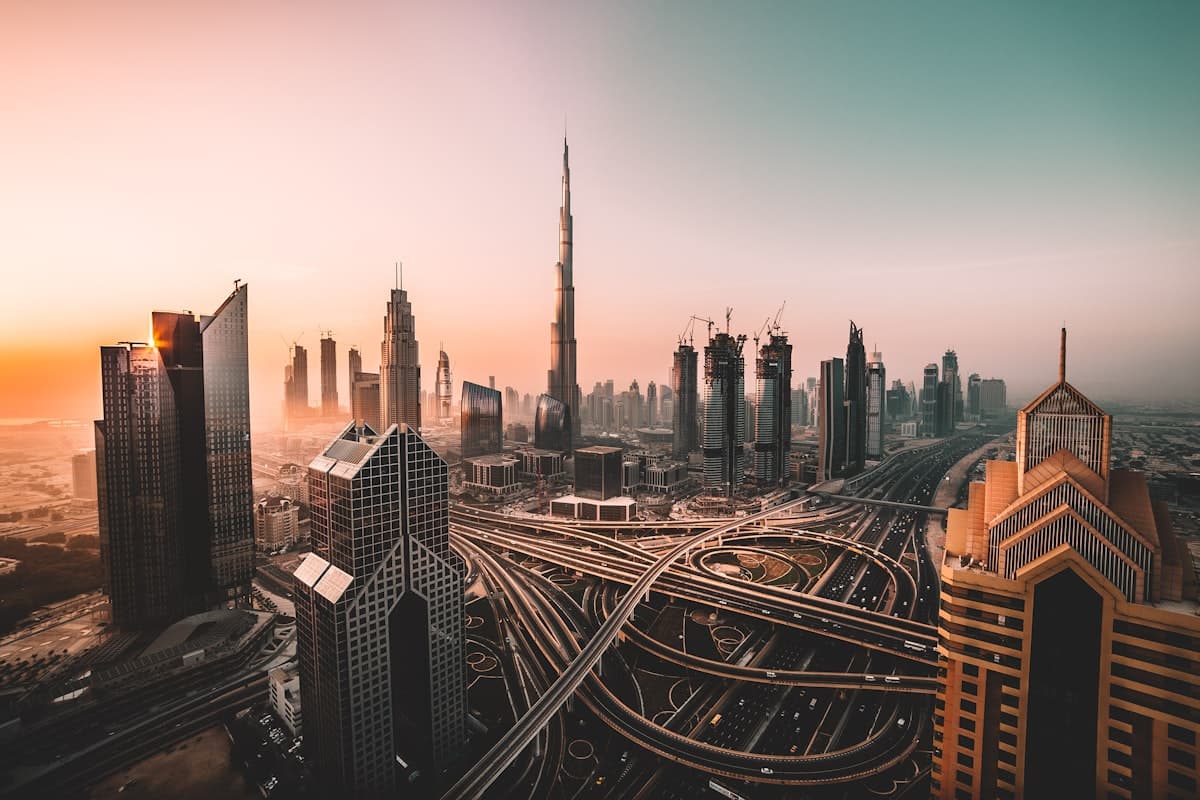
Almost everyone who visits Dubai has the same itinerary: the Burj Khalifa observation deck, a mall, a desert safari, maybe a dhow cruise. It is not a bad introduction. But it is genuinely the surface. Dubai has a second layer, older, messier, and more interesting, that exists entirely outside the skyline narrative.
Old Dubai: the city before the oil
Al Fahidi Historical Neighbourhood is a district of wind-tower houses built in the early 1900s by Persian merchants. The wind towers, hollow square shafts that funnel cool air downward, were the air conditioning of their day, and the architecture is unlike anything else in the Gulf. The Dubai Museum inside Al Fahidi Fort is small, inexpensive, and gives you the 200-year context that the rest of the city skips past. Spend a morning here before you visit anything glass and tall.
The Creek and the abra
The Dubai Creek divides the city into Deira in the north and Bur Dubai in the south. For 1 dirham, about 25 cents, a wooden water taxi called an abra takes you across. The crossing takes four minutes and is one of the best four minutes in the city: cargo dhows loading electronics and gold, the gold and spice souks on either bank, and a view of what Dubai looked like before the skyscrapers arrived. The Gold Souk has 300 shops selling roughly ten percent of the world's traded gold. The Spice Souk adjacent to it smells like saffron and dried roses and frankincense.
The food scene nobody talks about
Dubai has one of the most diverse food cities in the world, a direct result of a population that is over 80 percent expat. The best South Indian food outside of Chennai. Pakistani karahi joints in Deira open until 3 a.m. Iranian restaurants with bread baked in a tandoor visible through a window onto the street. Yemeni lamb mandi. Filipino lechon. The serious food is not in the malls or the hotel restaurants but in the neighborhoods of Bur Dubai and Deira where the working population actually eats.
The desert beyond the safari
The standard desert safari with quad bikes, sandboarding, barbecue and a belly dancer is fine as an evening's entertainment. The actual desert experience is different. An overnight camp in the Liwa Oasis near Abu Dhabi, four hours from Dubai, puts you in the Rub' al Khali, known as the Empty Quarter, the largest continuous sand desert on earth. The dunes are 200 meters high. The silence is physical. It is one of the most severe and beautiful landscapes on the planet and most Dubai visitors never know it exists.
Practical notes
Dubai is most comfortable from November through March, with highs in the mid-20s Celsius, cool evenings and almost no rain. April through October is hot and increasingly humid; July and August see temperatures above 40°C and outdoor activity is limited to early morning and evening. Ramadan changes the rhythm of the city significantly, with restaurants closing during daylight hours, alcohol restricted, and public eating discouraged. It is also, for many visitors, the most atmospheric time to be here.