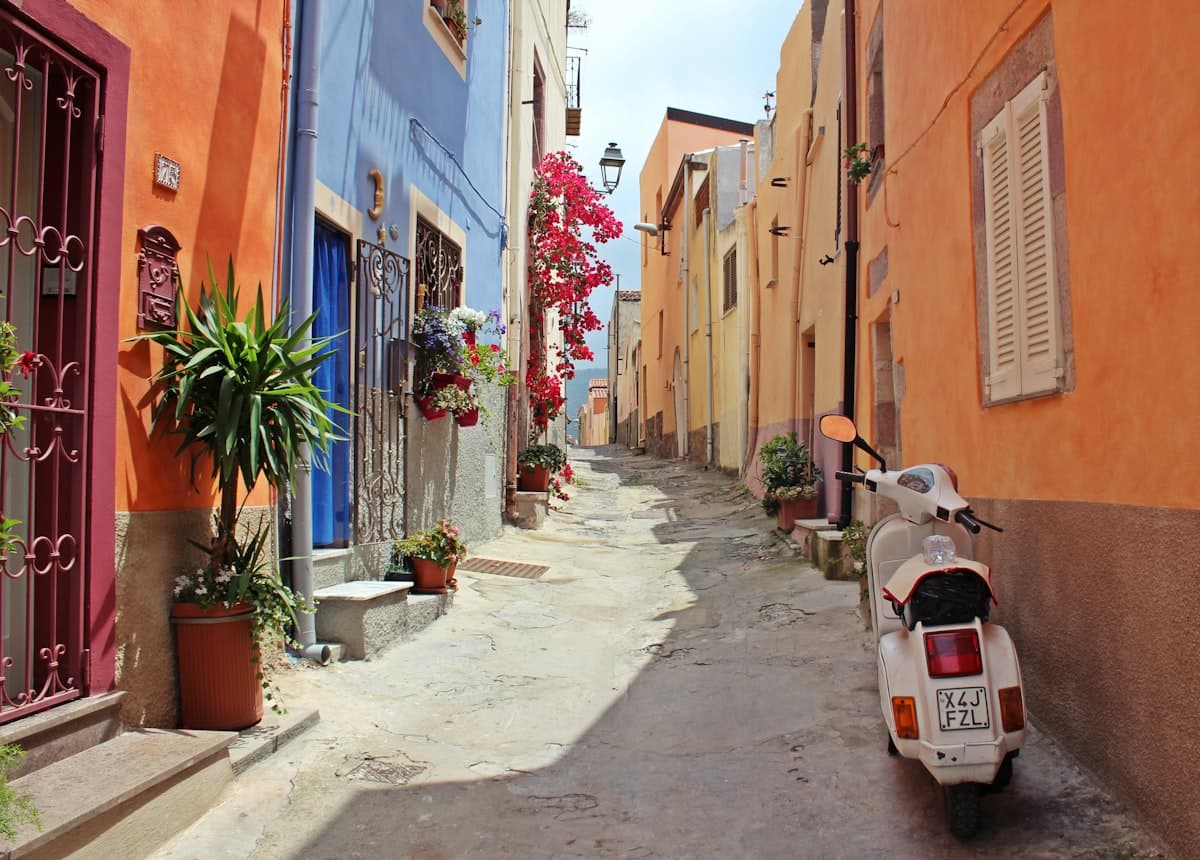
The single biggest mistake travelers make in Italy is treating it like a checklist. Four cities in seven days, three museums a day, dinner at 6 p.m. because you are exhausted from the museum. You leave full of facts and photographs and strangely empty of the thing Italy actually gives you, which is the pleasure of being alive in a specific place.
Eat on Italian time, not tourist time
Italians do not eat dinner at 6 or 7 p.m. They eat at 8:30 at the earliest, often closer to 9. The restaurants that are full at 7 p.m. are full of tourists eating mediocre food at inflated prices. Show up at 8:45, and you are now eating where the neighborhood shows up. The tables around you will be Italians, the menu will be shorter, and the food will be better. This single change improves every Italy trip we have ever planned.
The aperitivo hour is not optional
Between 6 and 8 p.m., before dinner, Italians drink. Not to get drunk but to transition from the workday to the evening. A Campari Spritz in Venice, a Negroni at a marble-topped bar in Florence, an Aperol in a piazza in Rome. Many bars lay out free snacks like bruschette, olives and chips that constitute a light dinner for some and a delicious preview for others. This is where you hear Italian being spoken and feel, briefly, like a resident.
Gelato: the one rule that matters
Gelato displayed in large, colorful, whipped-up mounds is almost always made with artificial coloring and pumped full of air to increase volume. Look for gelato stored in flat metal containers with lids, which signals it is artigianale, made on-site that morning. The pistachio should be brownish-green, not bright green. If it is bright green, keep walking.
Visit the second city in every region
Florence is magnificent. So is Lucca, which is walled, walkable, and 90 minutes away by train with one-tenth the visitors. Rome is Rome, but Orvieto on its volcanic plateau is a one-hour train ride and has a duomo that will stop you mid-sentence. Venice is Venice, but Padova has Giotto's Scrovegni Chapel, one of the most important works in Western art, and almost no queues. Italy's second cities are its best-kept secret.
Book museums before you land, not the morning you visit
The Uffizi, the Vatican Museums, the Borghese Gallery in Rome, and the Last Supper in Milan all require advance booking. The Borghese only admits 360 people per day in timed groups and regularly sells out two weeks ahead. If you have not booked these before your trip, you may not see them at all.
The one pace adjustment that changes everything
Pick one thing to do in the morning, one in the afternoon, and leave the evening unstructured. You will fill it. A detour through a neighborhood you were not planning to visit, a conversation with the owner of a ceramics shop, stumbling on a free concert in a courtyard. These are the memories that survive the trip. The scheduled items become the scaffolding. The unscheduled moments become the story.